OPSBA

The Legendary Lynn Barnes and the Willamette Valley Ram Sale!

Some things in life go hand in hand.  Salt and pepper, hotdogs and mustard, and the Willamette Valley Ram Sale and legendary Romney breeder Lynn Barnes.  Beloved by many and respected worldwide for his sheep, the amazing nonagenarian who recently passed was as humble in the end as when he started breeding sheep in the early thirties.
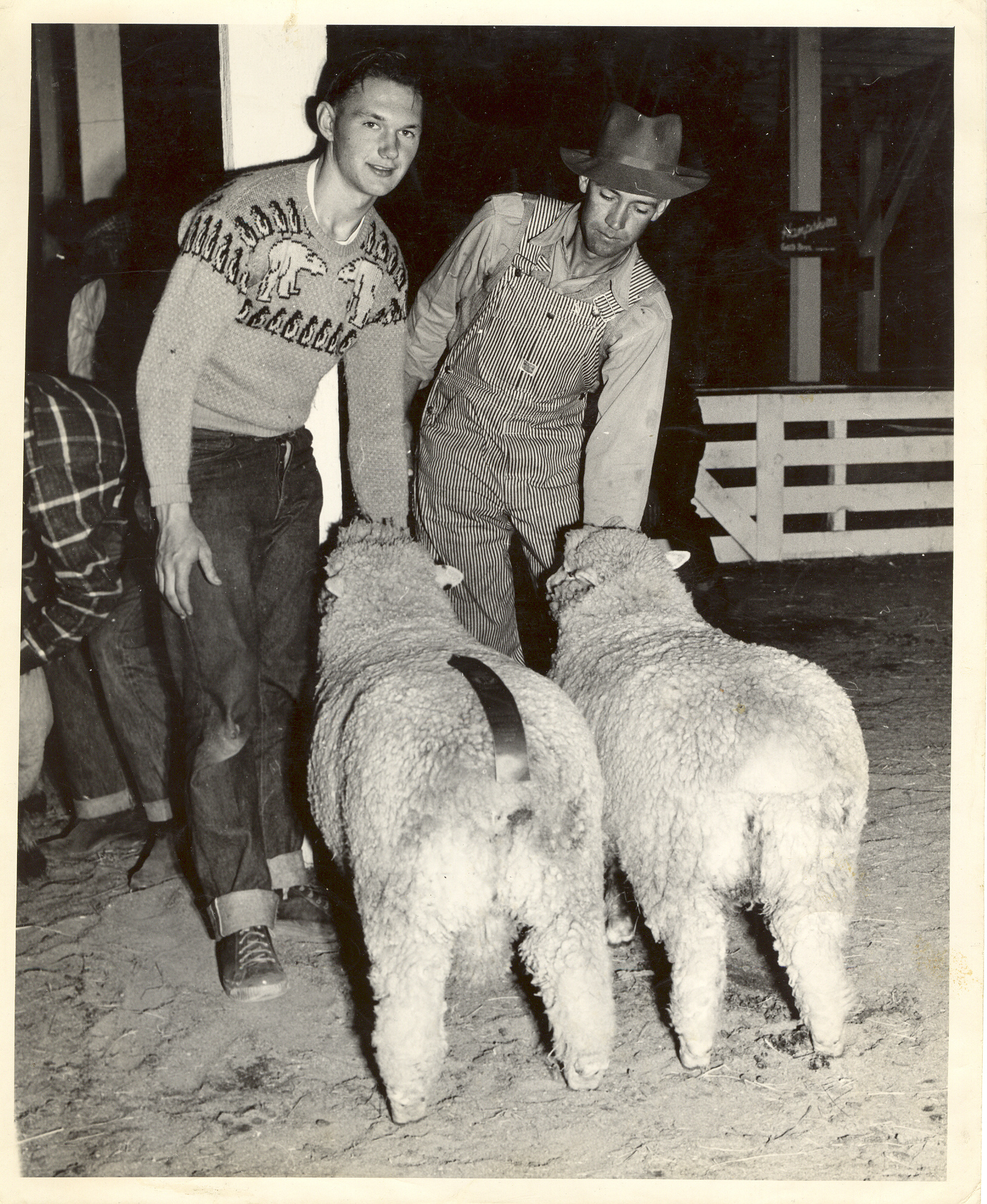
Born of a registered ewe purchased from the proceeds of raising a bummer lamb in 1932 and later the addition of four or five brood ewes, the Barnes Romney flock is reputed to be one of the oldest and purest lines of Romney sheep in the world.  While the ewe flock has remained closed since the initial brood ewe purchase in 1934, the storied veteran was meticulous, methodical and innovative about bringing in outside genetics via sire selection.

Barnes, along with close friend Eldon Riddle of Monmouth, were extremely progressive in years past bringing in a number of new ram lines to use on their ewe flocks.  Through imported semen, the two gentlemen were able to upgrade their flocks without losing the many great traditional traits of the Romney breed.
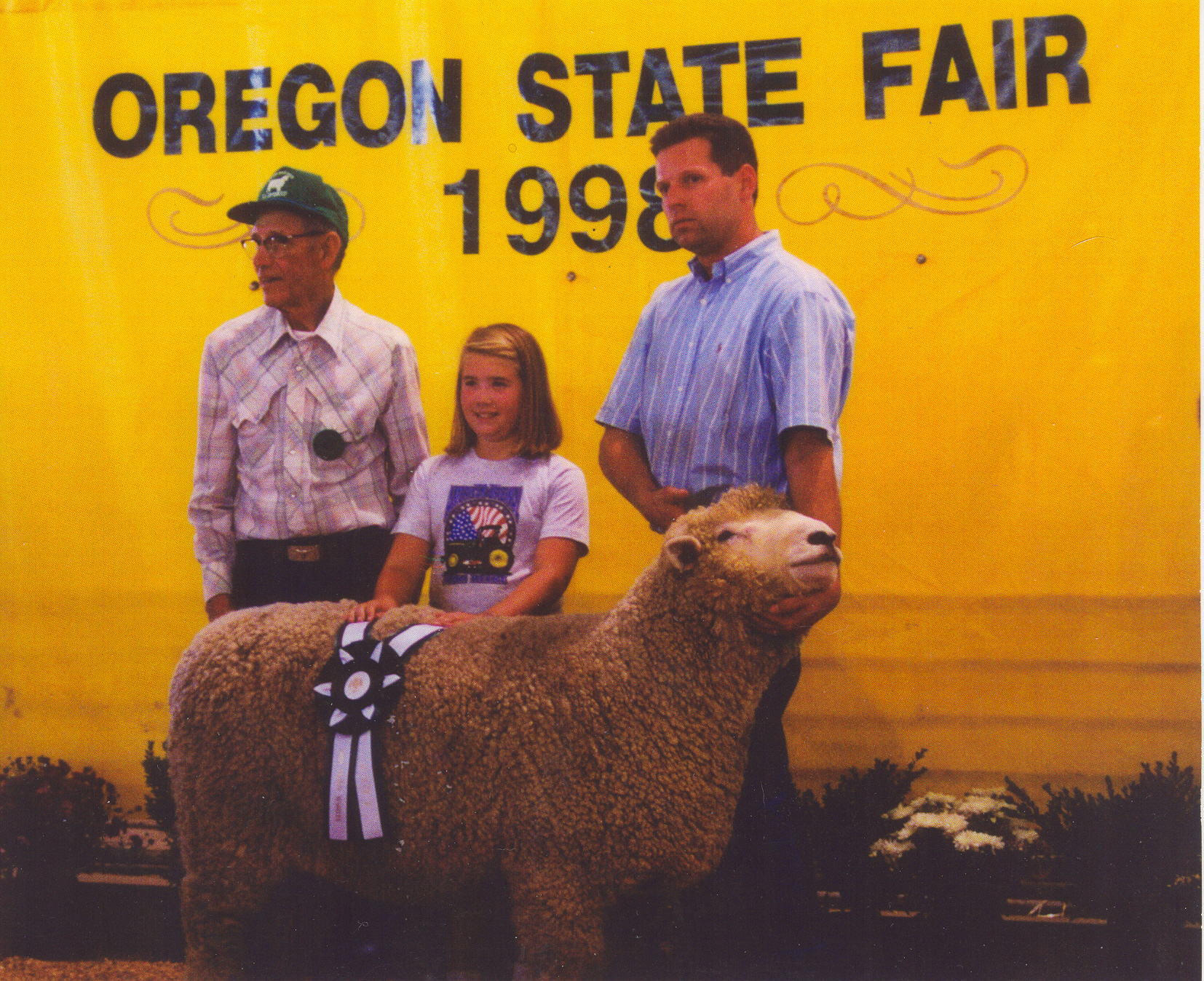
Two of those traits that have always been at the forefront of Barnes’ mindset are the breed’s adaptability to a full forage based diet and their amazing mothering ability.  Quoted in a 2007 Capital Press article, Barnes, a lifelong grass seed farmer was noted as saying, “The gain, though, depends on the feed and that comes back to annual ryegrass.”  Most who have known him best will contribute this focus to the success of his sheep over the decades.  While many reading this article might be quick to equate Barnes’ sole use of forages in the diet to sheep lacking a progressive stature to compete in today’s modern showring, that train of thought would be far from the truth.  Barnes sheep have sold near and far for many decades and are as successful in both breeding and show programs today as they always have been.

When I first interviewed Mr. Barnes for a Banner magazine article a few years back, the then ninety year old gentleman was lambing out one hundred ewes on his own.  With some help from relatives, Barnes was still going strong working his farm daylight to dark.  When ask about his key to success, he calmly pointed out his ewes have been bred over the years for low maintenance lambing.  Notes in the 2007 Capital Press article backed up this philosophy pointing out he had only had to assist one ewe out of one hundred and twenty-five ewes the lambing season before the CP interview.
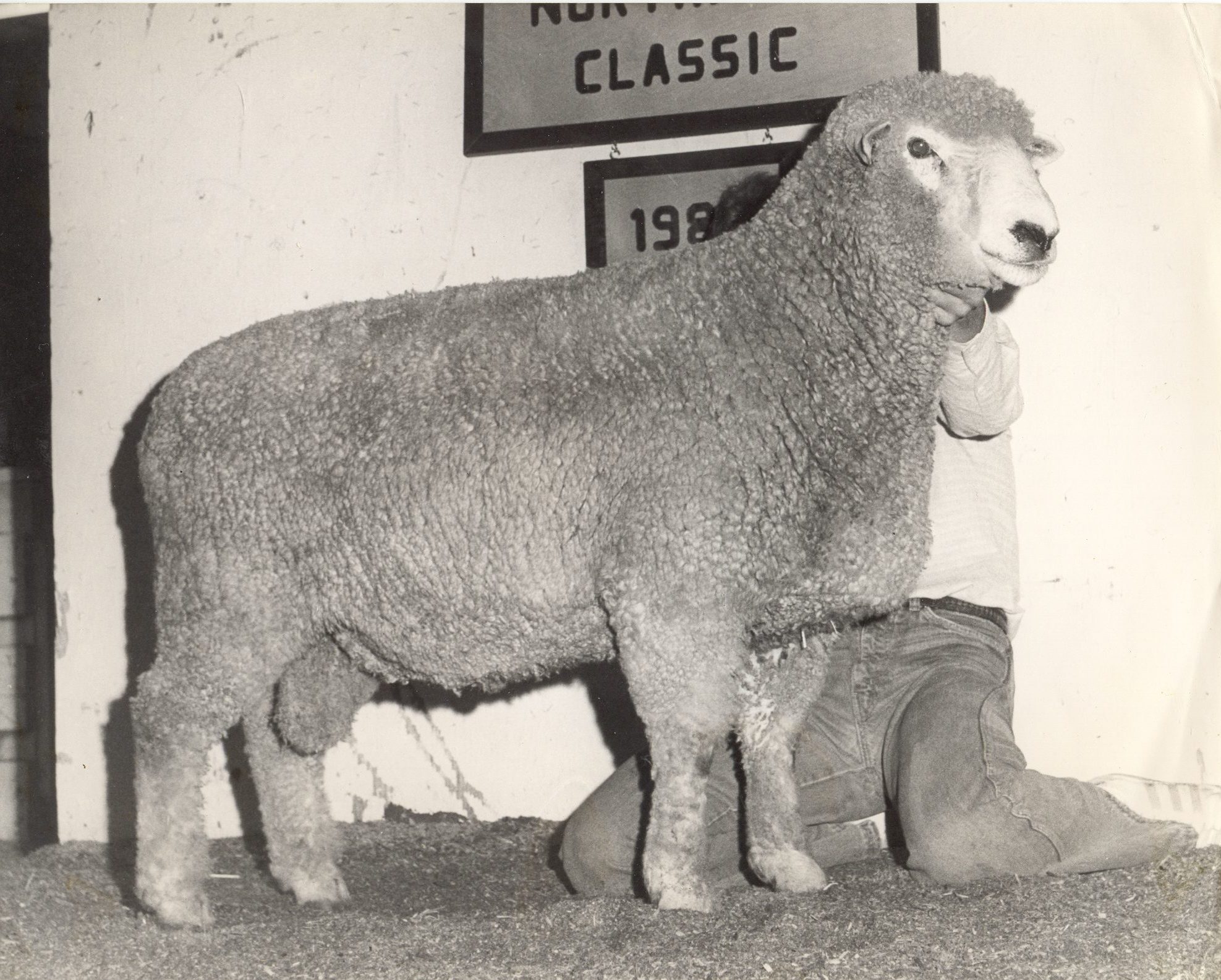
Lynn’s progressive attitude, attention to detail, and functional philosophy have worked well in creating a flock that has withstood the test of time.  It is also this philosophy that has helped the Willamette Valley Ram Sale withstand the test of time.  As the last remaining large-scale, onsite breeding sheep sale in the state of Oregon, the event attracts a number of folks from the West Coast and is a favorite among many in the sheep industry.

Barnes, who was an essential part of the first sale and the development of not only the ram sale, but the Oregon Purebred Sheep Breeders Association has been in attendance at all but one of the sales since its inception almost eighty years ago.  In addition, his sheep have topped the sale on several occasions and in more recent years had the honorary position of holding the lead spot in the sale to start off the bidding.

Initially the brainchild of noted extension specialist O.E. Mikesell from Linn County, the original sale committee heralded an amazing set of prominent purebred breeders of the era.  Reading like a who’s who of legendary industry influencers, the initial board was made up of the likes of trend setters Chauncey Hubbard Sr., Ronald Hogg, Eldon Riddle, Jimmy Harper and Barnes himself.  Legendary in their time, the impact these gentlemen left on our national sheep industry can still be felt today.

Quick to speak to this point and spread praise to the forefathers of this event is current sale committee chairman Kraig Ohling.  As he explained, more than the sale came from Mr. Mikesell’s vision to showcase the Oregon sheep industry.  From the initial effort grew not only the historic ram sale, but also the Oregon Purebred Sheep Breeders Association as well as the now retired original Linn County Fairgrounds in Albany, Oregon.  As Kraig extolled of the effort, “The sale was the spark that spawned the OPSBA.”

The sale would take place at the old Linn County Fairgrounds for many years until the land was sold to build the new fairgrounds east of town.  At that time, the sale would transition through a few locations including the Polk County Fairgrounds several miles north as well as the historic Oregon State Fairgrounds in Salem and in more recent years takes place in the little town of Scio, Oregon.

Set for July 29th this summer, the sale will continue on its tradition to sell high quality rams and ewes to a variety of breeders from throughout the industry.  However, there will be one historic addition to this year’s sale order, the dispersal of many of Lynn’s beloved sheep following the Willamette Valley Ram Sale.  Set to be called by veteran sheep producer and auctioneer Jake Fallesen of Crabtree, Barnes son Jerry confirmed the event.

With his recent passing and a storied career behind him, Barnes sheep are sure to draw a crowd and add an extra element to the event.  As the younger Barnes noted of his legendary father’s philosophy towards raising his sheep, “Dad has always had the best of two worlds.  He has always raised grass and Romneys.  He has truly loved his Romneys in the ryegrass.”

As Jerry recalled of his father’s involvement in the Willamette Valley Ram Sale, his father has only missed one sale over its almost eighty year history.   Fortunately for Lynn, Jerry, then fifteen took the family’s sheep to the sale keeping his attendance streak alive and well.

While being in the sheep industry for over eighty years is quite an accomplishment in its own right, being in attendance at an event such as the Willamette Valley Ram Sale for so many years is downright unheard of.  This year as we attend this annual event, we can all take a moment to celebrate and reflect on the life’s work of such a phenomenal gentleman and the footprint he has left on not only the Willamette Valley Ram Sale, but on the worldwide sheep industry.  Mr. Lynn Barnes, your leadership and great service to our industry will be deeply missed, however your legacy will live on forever.  May your impact on our sheep industry be felt by the many generations to follow!
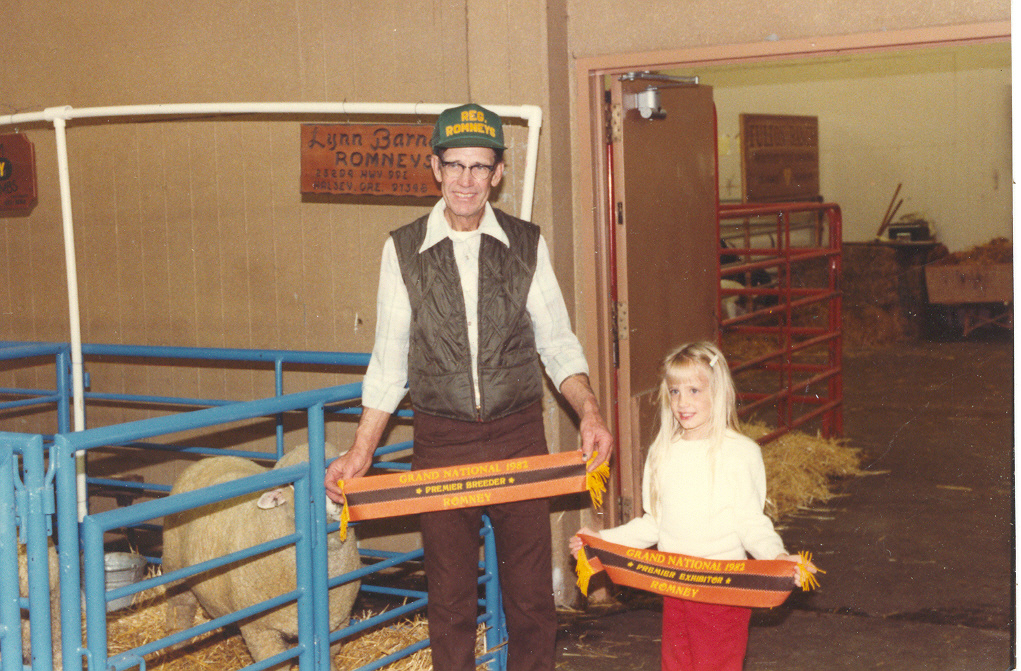
NOTE:  I would like to extend a sincere thank you to Greg Deakin at The Banner Sheep Magazine for allowing me to use this story on the Oregon Sheep Connection blog.  Originally written to be published in an upcoming issue of the magazine, Mr. Barnes’ passing moved me to ask Greg if I could use the story here so fellow sheep enthusiasts can read and share before the 2017 Willamette Valley Ram Sale and the Barnes Dispersal Sale.  Please watch for a printed version of this story in the upcoming issue of The Banner Sheep Magazine!


Categories: Current Issues, OPSBA, Uncategorized, upcoming events | Leave a comment

H-2A Proposal— It’s Everyone’s Problem!

If you are involved in the sheep industry then chances are you have heard something about the proposed rule changes governing the H-2A Sheepherder program.  Whether it has been an email from ASI Executive Director Peter Orwick, a post in the weekly ASI email bulletin or a written  plea of support from your local sheep association, you should by now know the H-2A topic is garnering a lot of buzz and with the June 1st public comment deadline looming only a couple of days away, it is certainly turning into a hot topic that has a number of folks fearing the long term impact it could have on our sheep industry.

If you raise sheep and the H-2A topic isn’t at the forefront of your conversations and thought process this weekend, then it should be.  You might ask yourself, does this really affect me?  The answer in one word is…YES!

Unfortunately for many of us, we don’t think this news affects us.  As a busy small purebred producer, hobby fiber farmer or club lamb enthusiast we might be quick to dismiss this proposed policy change as yet another commercial man’s problem, which on the outside it is.  Really in reality, how many of us weekend warrior, carhartt wearing sheep enthusiasts employ imported labor to care for our twenty acres of bliss?  The answer is very few to none!

Chances are if you are like me, a small scale producer that doesn’t employ these workers you might be asking yourself, is all of the time invested delving deeper into this complicated issue and writing an email to the US Department of Labor by June 1st going to fix anything?  Heck, for that matter how do I write the email and which facts do I put into it?

While ultimately there is no guarantee a truckload of comments turned in by industry members will make a change in the current direction of the proposed policy change, however an on-slot of opinions will certainly be on record to point out clearly what those leading this crusade already know.  The fact is this proposed policy change was created by publicly paid bureaucrats who chose not to engage stakeholders in yet another governing process!

Outside of the fact that good legislation or policy should always be the result of collaborative efforts from all parties involved, why is this piece of policy which on the outside appears to affect such a small percentage of our industry important to everyone?

The answer can simply be summed up in two words, “Industry Infrastructure”.  Without industry infrastructure we will fail to have a sheep industry and quite honestly unless you are part of the small minority of producers who markets their lambs, fleeces and bi-products direct to the consumer bi-passing any and all of the traditional harvesting and marketing channels then you will be affected if the changes are implemented as proposed.

Like putting together a jigsaw puzzle, to get a better view of how all of this fits together we must first look at the individual pieces to the puzzle .

  1. What is the H-2A Sheepherder Program and how does it currently affect the infrastructure of our sheep industry?
  2. What are the proposed changes and what affects will they have on our industry?
  3. How can we help?

What is the H-2A Sheepherd Program and how does it affect the infrastructure of our sheep industry?

The H-2A Sheepherder program is a longstanding arrangement overseen by the US Department of Labor.  This program provides a number of our industry’s larger operations with the opportunity to employ skilled workers on work visas from South America and other countries to tend to their flocks, herd their sheep/cattle and engage in the direct production of livestock.

As a small flock producer, the proposed rule changes don’t really have a significant direct impact on us.  I don’t employee workers, I have no need to increase wages and fill out more paperwork, however this ruling has a huge effect on the larger producers and in the long run this truly does affect me!  Why?

Simple, according to a data document provided by Dr. Julie Shiflett, a consultant to the American Sheep Industry office, 38% of our industry’s breeding inventory is managed under this scenario.  Thirty eight percent sounds like a small number until you realize this thirty-eight percent of breeding stock produces a great majority of the lambs and wool providing a steady stream of inventory being fed into the traditional supply chains that feed our lamb feeders, wool supply houses and harvest facilities.

This steady stream of supply from these H-2A herded flocks is what enables our large nationally based harvesting facilities and wool warehouses to continue to offer their customer base a consistent volume of product.  In fact in a recent comment letter made public by ASI, Mountain States Lamb Cooperative clearly noted, “Approximately 65 % of the lambs marketed through our cooperative come directly from ranchers using H-2A open range livestock herders”.  Simply put folks that is two-thirds of their inventory volume comes from operations who will be negatively impacted by the proposed regulations!

Without this ready supply of resources, these steady supply chains risk the threat of starting to dry up and facilities may ultimately lack the inventory to continue at current production levels thus having to  downsize their operations or even shutter their doors.

These are the same entities who have been  investing hundreds of thousands of dollars into our industry to encourage growth via the ASI Let’s Grow program and supporting the American Lamb Board.  If supply channels dry up and money slows down, there is a good chance these funding opportunities to promote lamb and drive our state and local  sheep associations into the future will also dry up.

In addition, this may open up the door for these larger entities to turn to foreign raised lamb to help offset the loss in volume from American producers.

Still not convinced?  Ask yourself where your lambs and wool are ultimately processed.  Think about the benefits, primarily paid for through the dollars of these large producers, the American Lamb Board’s efforts have created for all of us over the past several years.  Think about the amount of money our large warehouse wool buyers have contributed to the OSGA Scholarship fund over the years.   Finally, take count of the number of supporting industries from pharmaceutical and supply companies to transportation and service providers  that will be impacted by a significant decline in sheep numbers.

What are the proposed changes and what affects will they have on our industry?

If you have taken a moment to wade through the proposed policy information that has been sent out, you might be scratching your head and wondering about the key points which have so many folks deeply concerned about the proposed changes.   Ultimately, how do these specific proposed changes impact the future of our industry.  Luckily for all of the  political laymen, ASI, NLFA  and the Oregon Sheep Growers Association office has been working feverishly to simplify the points.  According to documents recently released from ASI, the major issues at the heart of the matter are:

1. The proposed rules would triple the wages paid to H-2A workers.

2. The proposed job description insists that livestock grazing takes place away from fences and, further half of the herders’ year must be away from the ranch headquarters and livestock facilities.

Let’s all face it, unless you are really lucky or an extremely skilled businessman, it is hard to get rich raising sheep.  We have all faced this conversation as we speak with a consumer regarding the cost of lamb on the retail shelf.  As we guide them through the costs and steps to producing these critters our mind can easily start to see just how slight the profit margin is in our industry.

Add to that unforeseen weather issues, predator problems and the rising cost of feed and fuel and on most years we are pushed to the limit.  This proposed Department of Labor policy would triple the cost of paying for labor.  Statistics recently released by ASI point out currently in most operations, hired labor can be figured in as 24 percent of an outfit’s total operating costs.  It doesn’t take a mathematician to quickly decipher the effects of tripling this wage and ultimately calculate the crippling outcome it could have on most operations.

While significantly increasing worker’s wages does have the prospect of being financially debilitating for a number of operations in our industry, the slamming door for a number of the folks directly impacted by these changes will be the ability to stay within the herder’s job description as outlined in the new proposal.

As most of us already know the sheep industry is diverse.  Because of our adaptability and the adaptability of the critters we raise, we can utilize a lot of different landscapes to raise a natural and wholesome product for the consumer.  In some cases this is utilizing federal permit land for summer grazing and in other instances it is helping to manage forage in a sustainable manner such as grazing the grass seed fields of the Willamette Valley.

In either scenario, the production herd will spend some of their time in a fenced scenario and need the careful eye of these trained shepherds to watch over them thus providing for their safety and well-being.

One argument I have heard from some in our industry is the new language in the proposed policy may provide an opportunity for producers to utilize more home-grown labor and force us to stop relying on imported labor resources to do the job.  While in theory this argument sounds wonderful, however in reality it might be another story.

To see the reality check of hiring local labor over imported labor one needs to look no farther than an article from October of 2011 appearing in The New York Times.  The article entitled, “Hiring Locally for Farm Work Is No Cure-All” outlines the hardships farmers from Olathe, Colorado faced when they tried to hire local labor for farm work a few years back.  This was when unemployment was at a high in recent years, so one can only imagine the results in today’s new and improved economy.

How can we help?

  1. Go to the American Sheep Industry’s Issues and Programs Legislative Action Center page.
  2. Read through the information provided to familiarize yourself with the issue.
  3. Click on the “View Posted Comments” link to get some inspiration and see others who have taken the time to give input.
  4. Click on the “Submit Comments Online” button to provide your input.

This issue is a bit like dealing with a wormy, runny sheep.  We all have choices, we can deworm the sheep and cure the runs or we can wait until things heat up and deal with the fly strike.  We are certainly capable of dealing with either one, the big questions are how much time do you want to invest and how much money do you want to lose!

If you have taken the time to read this post through and I have piqued your interest, then take the time to jot down a few comments.  Ultimately, we can either choose to be part of the solution or part of the problem.  Which choice are you going to make?

“Life is about choices.  Some we regret, some we are proud of.  Some will haunt us forever.”

Graham Brown


Categories: Current Issues, Fiber Enthusiasts, OPSBA, Oregon Wool, OSGA, Uncategorized, upcoming events, Wether Sire/Dams, Youth Activities | Tags: , , , | Leave a comment

Reinvigorating the Oregon Sheep Industry—Ewe Lamb Sale Set for this Weekend!!!

There was once a time in Oregon Sheep Industry history when ewe and ram sales were plentiful and the chance to get out multiple times a year to network with your peers over a complimentary meal,welcome new folks into the sheep family and quite honestly just compare notes about genetics over a steel railing were plentiful.  These wonderful social gatherings also afforded producers an opportunity to exchange great innovative ideas, pick up some wonderful genetics to add to their flocks, and allow juniors to be able to purchase some very competitive sheep to add to their summer show strings, all without a lot of drive time, travel expenses, and transportation hassles.

Then something happened and the historic sales started disappearing one by one until the Willamette Valley Ram Sale held in Scio every summer is the only one remaining.

While the sales have slowly disappeared, one thing hasn’t changed through this transition.

Continue reading

Categories: OPSBA, Uncategorized, upcoming events, Youth Activities | Leave a comment

Over the river and through the woods….

As the diddie Over the River and Through the woods to Grandma’s house we go plays over and over again in my mind I can’t help but think back to a year ago.  It was the evening before the Oregon Purebred Sheep Breeders Association meeting in Salem and the weather outside was frightful with only a small window of clear weather in the near future.  So it was with that knowledge I impatiently checked and rechecked the weather reports until surely the mouse on my computer was about ready to give out.

As I arose early Saturday morning to a mild skiff of snow in Central Oregon I quickly leaped to the computer to get a glimpse at tripcheck.  As I brought up camera after camera across all of the passes my heart sank.  Chains were required on all of the mountain passes.  Next to my ace in the hole…the gorge.  Was it passable?  Well according to tripcheck and many of my former students in Hood River, only with a rowboat.

So as the day wore on, my frustration level rose.  Not only were my girls having a melt down as we might miss out on one of the most important social events of the season, but my older parents who live nearby were deeply concerned about our safety if we were to try to cross the pass.

The silver lining in the cloud so to speak is that an unusual warm front carrying higher than normal temperatures and a lot of rain was set to hit the Willamette Valley and the Cascades at any moment and when it did it would be like the parting of the seas.  So it was with great awe I watched as the snow quickly melted away through the day to the point it was safe to travel the passes for a meeting and what would turn out to be a great sleepover and playdate with sheep peeps.

Luckily for us we have built up quite the map of local Willamette Valley sheep hostels that will take in a wayward shepherd and her flock on a moments notice.  But possibly more importantly I look back on the eve of this year’s purebred meeting to ponder why the trek over the river and through the woods was so important and quite frankly the answer is to see my extended sheep family.  They are the people I have come to celebrate some of my most important accomplishments as well as some of my greatest defeats.  They are the individuals that are there to support each other and champion our mutual causes.  They are the ones that are there for advice and often times just a shoulder to cry on, but the point is they are there for the important moments.

Today we are very blessed to have quite possibly the strongest emerging sheep industry I have seen in Oregon since the 1980’s and we are on the verge of doing amazing things.  As I wake tomorrow to look at the mountain tripcheck cams it will be with great anticipation that I look forward to seeing black pavement and my some of my favorite sheep peeps!  Sweet dreams of over the river and through the woods….

Categories: OPSBA, Uncategorized | Leave a comment

Is its Bark Bigger than its Bite?

As I sit down to ponder the plethora of wolf information I have gathered over the past few weeks my mind keeps wandering back to one thought-is its bark bigger than its bite?

I came to the conclusion that in some sense it is.  That sense is the fact that the environmental and animal rights factions has the ear of the public and boy are they making a lot of noise.  From naming the wayward wolf in Southern Oregon to romantasizing the ecotourism centered around them to offset economic losses in the community, the wolf is being applauded by those factions as a great addition to the area.  While in reality ranchers continue to watch not only their livelihood be affected but the overall mental and physical health of the very herds they have been entrusted to care for and protect.

Although I have seen some great print stories throughout the past few weeks, I have to say  one of the most moving pieces of media I have found so far is the one produced by the Wallowa Valley Online at http://wallowavalleyonline.com/wvo/?p=10041 .

With this said, it is truly our time to step up and call the environmental factions bluff.  We need to ultimately decide whether their bark is bigger than their bite?  Check out this video and you decide what role you want to play in this game.  Either pass it on or delete it, the decision is yours.

Categories: Current Issues, OPSBA, OSGA, Uncategorized | 5 Comments

Oregon Youth Excel in Louisville

The Oregon sheep industry was well represented at the 2011 North American International Livestock Exposition held in Louisville, Kentucky.  This annual event attracts the elite livestock exhibitors from around the nation to compete in many  competitions.  Eight individuals from Oregon traveled back this fall to compete in a myriad of junior events garnering a number of quality placings in classes that typically have a very high number of participants.  Izzy Wade from Silverton, Oregon earned a number of first place finishes including first in the Ladies Lead Class and sheep showmanship, as well as exhibiting the Reserve Champion Junior Fitted Hampshire Ewe of the show.   Also exhibiting in the Ladies Lead, showmanship and Junior Hampshire Division were sisters Katie and Ellie Hanson from Woodburn, Oregon.  The duo teamed up take second place in a number of the classes.

Emma Joy Hawkins from Shedd, Oregon garnered a number of top rankings while exhibiting her Shropshire sheep in the junior show.  Many of her lambs that were part of the 2011 Oregon State Fair Award winning Young Flock placed near the top of their classes.  Both Alissa Boatman-Green of Prineville, Oregon and Jessica Juvinal of Central Point, Oregon exhibited a number of market lambs who placed near the top of their classes in a show that hit record numbers of over 1700 market lambs.  In addition Alissa placed third overall in her age division for showmanship.  Other exhibitors were Johanna Dejoria of Newberg, Oregon who was delighted to receive the nod from the judge for the Reserve Champion Junior Fitted Horned Dorset Ewe  and Ashley Harelson from Aurora, Oregon who served as the National Southdown Ambassador helping to organize the Junior Southdown Show.

Categories: OPSBA, Wether Sire/Dams, Youth Activities | Leave a comment

A Record Breaking Night!!!

Continue reading

Categories: Fiber Enthusiasts, OPSBA, Oregon Wool, OSGA, Uncategorized, Wether Sire/Dams, Youth Activities | Leave a comment

Shepherd’s Unite to Celebrate

Although the summer fair and show season are always a great time to get together, December is truly the time to celebrate all of our many successes of the past year with our extended “sheep family”.  kicking off the social season this weekend is the Oregon Sheep Growers Association Annual Convention http://www.sheeporegon.com/  to be held in Sunriver.  As the state faction representing the American Sheep Industry http://www.sheepusa.org/ on our state level there will be a wide array of hot topics to discuss ranging from upcoming promotional events to what’s happening on the national level.  You can join a number of our Oregon Shepherds who sit on a variety of national boards as they update everyone on the current issues facing our sheep industry.

Also, president Reed Anderson has arranged for an agenda full of great educational opportunities from a number of keynote speakers brought in from around the nation.  From neo-natal scours to the effects of selenium to a presentation on the wool market outlook and Sustainable Ag and the USDA there is bound to be a topic for everyone.

In addition, there will be a number of fun social activities to take part in and work on your networking skills.  Kicking off the event is the Thursday evening President’s Reception, another dinner and scholarship auction on Friday evening and the wonderful Lamb dinner and Make It With Wool Fashion Show scheduled as the grand finale for Saturday evening.

Contact:  Nikki via the OSGA office at 503-364-5462

Categories: Fiber Enthusiasts, OPSBA, Oregon Wool, OSGA, Wether Sire/Dams, Youth Activities | 1 Comment

Blog at WordPress.com.