Current Issues

The Legendary Lynn Barnes and the Willamette Valley Ram Sale!

Some things in life go hand in hand.  Salt and pepper, hotdogs and mustard, and the Willamette Valley Ram Sale and legendary Romney breeder Lynn Barnes.  Beloved by many and respected worldwide for his sheep, the amazing nonagenarian who recently passed was as humble in the end as when he started breeding sheep in the early thirties.
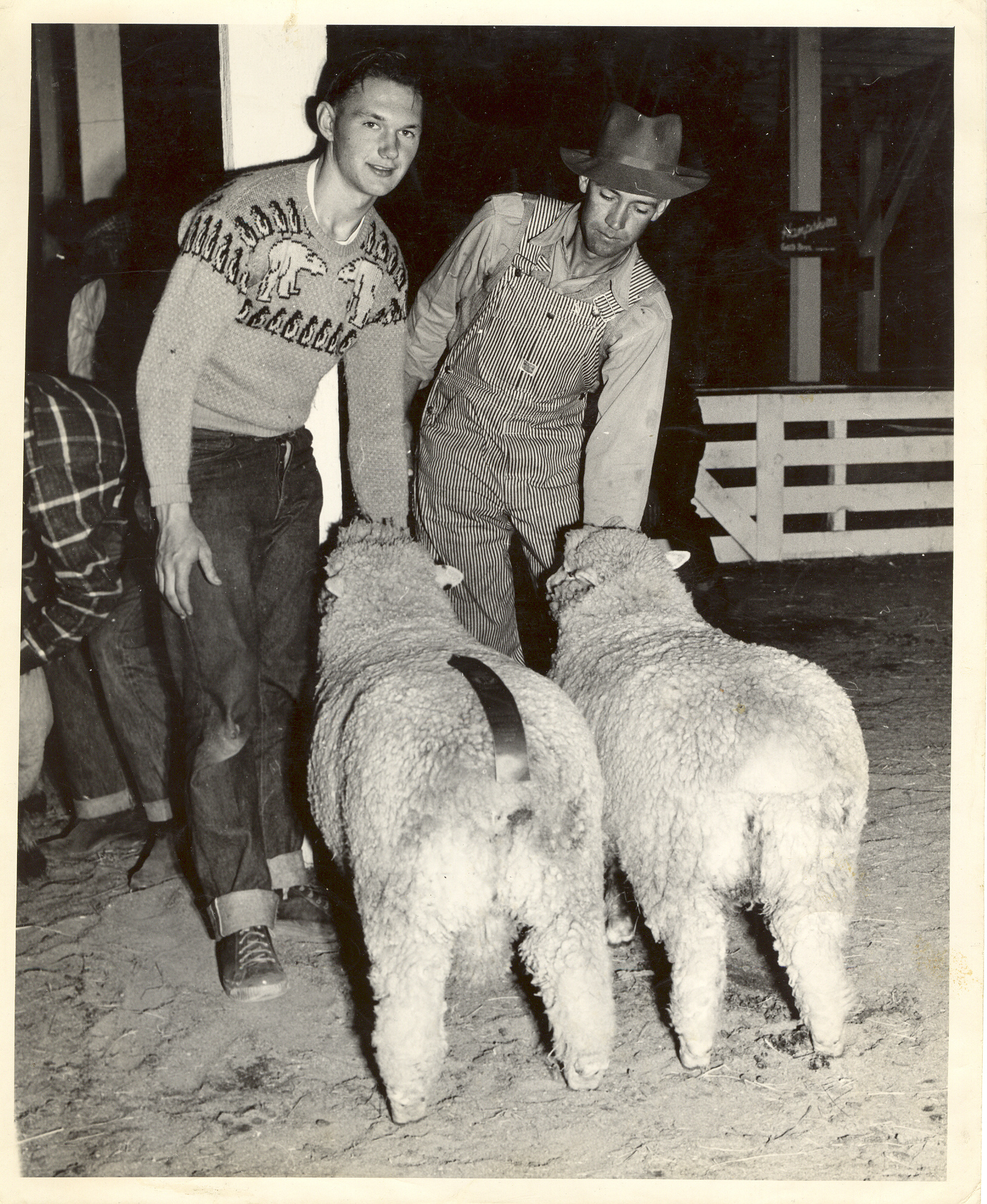
Born of a registered ewe purchased from the proceeds of raising a bummer lamb in 1932 and later the addition of four or five brood ewes, the Barnes Romney flock is reputed to be one of the oldest and purest lines of Romney sheep in the world.  While the ewe flock has remained closed since the initial brood ewe purchase in 1934, the storied veteran was meticulous, methodical and innovative about bringing in outside genetics via sire selection.

Barnes, along with close friend Eldon Riddle of Monmouth, were extremely progressive in years past bringing in a number of new ram lines to use on their ewe flocks.  Through imported semen, the two gentlemen were able to upgrade their flocks without losing the many great traditional traits of the Romney breed.
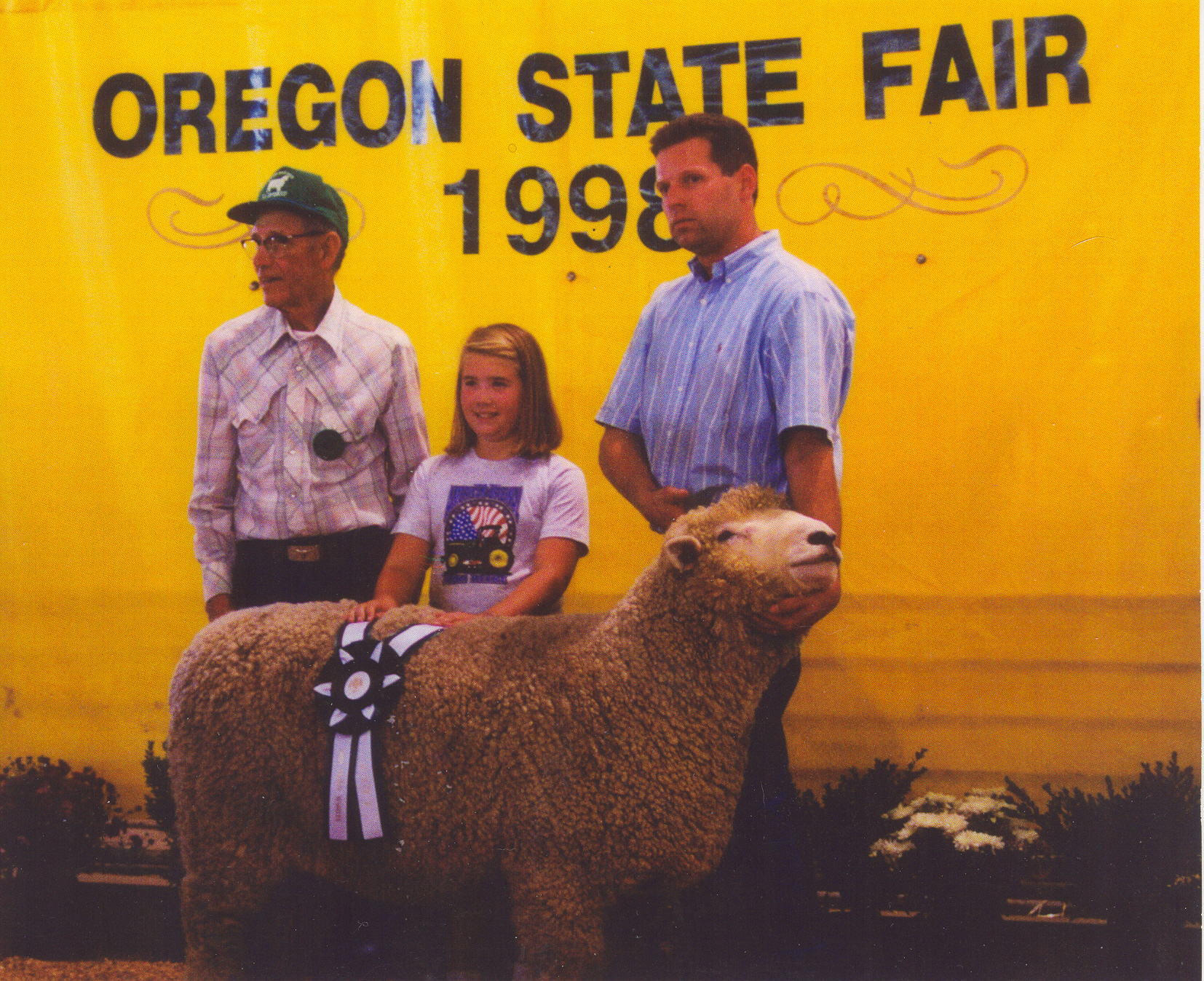
Two of those traits that have always been at the forefront of Barnes’ mindset are the breed’s adaptability to a full forage based diet and their amazing mothering ability.  Quoted in a 2007 Capital Press article, Barnes, a lifelong grass seed farmer was noted as saying, “The gain, though, depends on the feed and that comes back to annual ryegrass.”  Most who have known him best will contribute this focus to the success of his sheep over the decades.  While many reading this article might be quick to equate Barnes’ sole use of forages in the diet to sheep lacking a progressive stature to compete in today’s modern showring, that train of thought would be far from the truth.  Barnes sheep have sold near and far for many decades and are as successful in both breeding and show programs today as they always have been.

When I first interviewed Mr. Barnes for a Banner magazine article a few years back, the then ninety year old gentleman was lambing out one hundred ewes on his own.  With some help from relatives, Barnes was still going strong working his farm daylight to dark.  When ask about his key to success, he calmly pointed out his ewes have been bred over the years for low maintenance lambing.  Notes in the 2007 Capital Press article backed up this philosophy pointing out he had only had to assist one ewe out of one hundred and twenty-five ewes the lambing season before the CP interview.
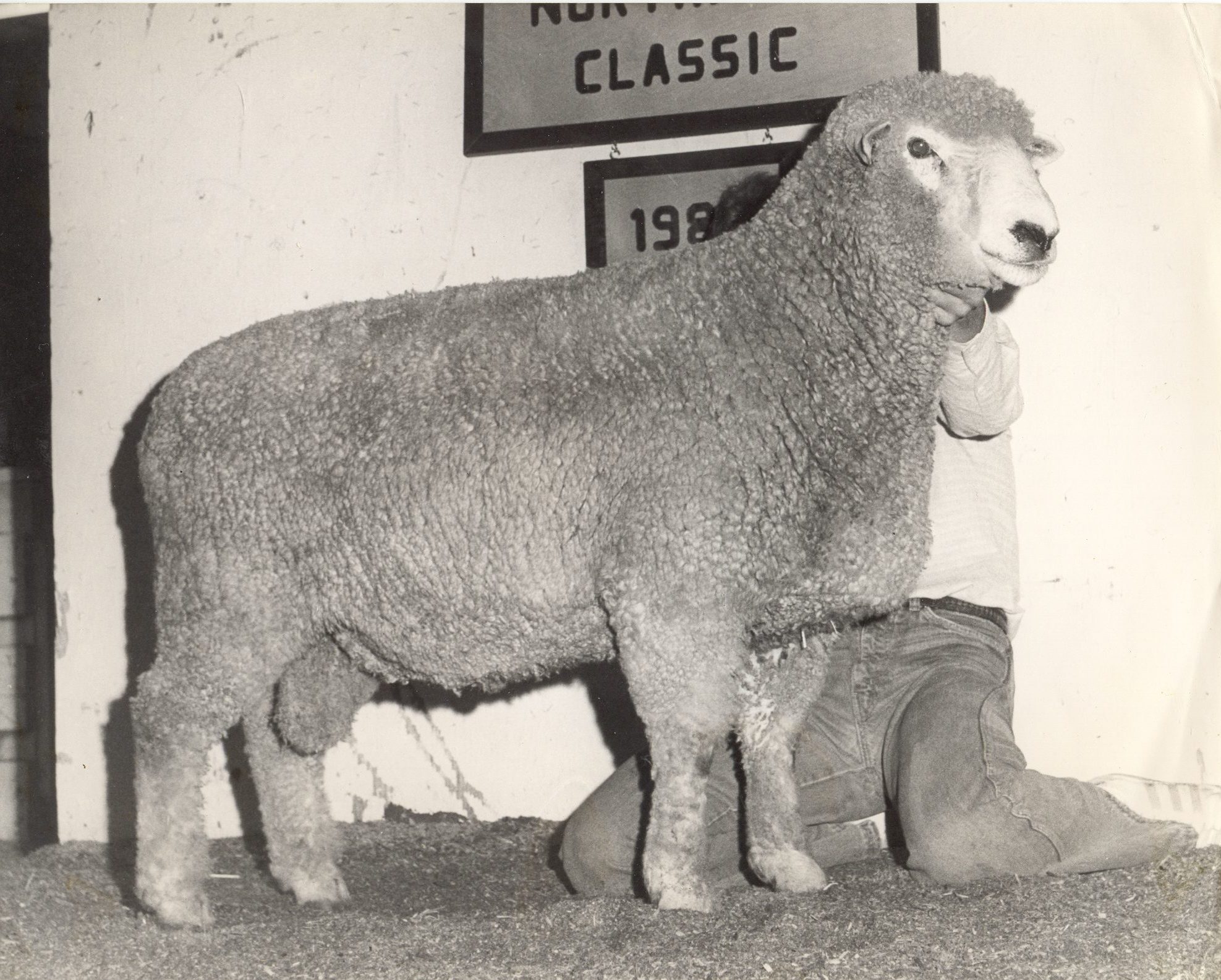
Lynn’s progressive attitude, attention to detail, and functional philosophy have worked well in creating a flock that has withstood the test of time.  It is also this philosophy that has helped the Willamette Valley Ram Sale withstand the test of time.  As the last remaining large-scale, onsite breeding sheep sale in the state of Oregon, the event attracts a number of folks from the West Coast and is a favorite among many in the sheep industry.

Barnes, who was an essential part of the first sale and the development of not only the ram sale, but the Oregon Purebred Sheep Breeders Association has been in attendance at all but one of the sales since its inception almost eighty years ago.  In addition, his sheep have topped the sale on several occasions and in more recent years had the honorary position of holding the lead spot in the sale to start off the bidding.

Initially the brainchild of noted extension specialist O.E. Mikesell from Linn County, the original sale committee heralded an amazing set of prominent purebred breeders of the era.  Reading like a who’s who of legendary industry influencers, the initial board was made up of the likes of trend setters Chauncey Hubbard Sr., Ronald Hogg, Eldon Riddle, Jimmy Harper and Barnes himself.  Legendary in their time, the impact these gentlemen left on our national sheep industry can still be felt today.

Quick to speak to this point and spread praise to the forefathers of this event is current sale committee chairman Kraig Ohling.  As he explained, more than the sale came from Mr. Mikesell’s vision to showcase the Oregon sheep industry.  From the initial effort grew not only the historic ram sale, but also the Oregon Purebred Sheep Breeders Association as well as the now retired original Linn County Fairgrounds in Albany, Oregon.  As Kraig extolled of the effort, “The sale was the spark that spawned the OPSBA.”

The sale would take place at the old Linn County Fairgrounds for many years until the land was sold to build the new fairgrounds east of town.  At that time, the sale would transition through a few locations including the Polk County Fairgrounds several miles north as well as the historic Oregon State Fairgrounds in Salem and in more recent years takes place in the little town of Scio, Oregon.

Set for July 29th this summer, the sale will continue on its tradition to sell high quality rams and ewes to a variety of breeders from throughout the industry.  However, there will be one historic addition to this year’s sale order, the dispersal of many of Lynn’s beloved sheep following the Willamette Valley Ram Sale.  Set to be called by veteran sheep producer and auctioneer Jake Fallesen of Crabtree, Barnes son Jerry confirmed the event.

With his recent passing and a storied career behind him, Barnes sheep are sure to draw a crowd and add an extra element to the event.  As the younger Barnes noted of his legendary father’s philosophy towards raising his sheep, “Dad has always had the best of two worlds.  He has always raised grass and Romneys.  He has truly loved his Romneys in the ryegrass.”

As Jerry recalled of his father’s involvement in the Willamette Valley Ram Sale, his father has only missed one sale over its almost eighty year history.   Fortunately for Lynn, Jerry, then fifteen took the family’s sheep to the sale keeping his attendance streak alive and well.

While being in the sheep industry for over eighty years is quite an accomplishment in its own right, being in attendance at an event such as the Willamette Valley Ram Sale for so many years is downright unheard of.  This year as we attend this annual event, we can all take a moment to celebrate and reflect on the life’s work of such a phenomenal gentleman and the footprint he has left on not only the Willamette Valley Ram Sale, but on the worldwide sheep industry.  Mr. Lynn Barnes, your leadership and great service to our industry will be deeply missed, however your legacy will live on forever.  May your impact on our sheep industry be felt by the many generations to follow!
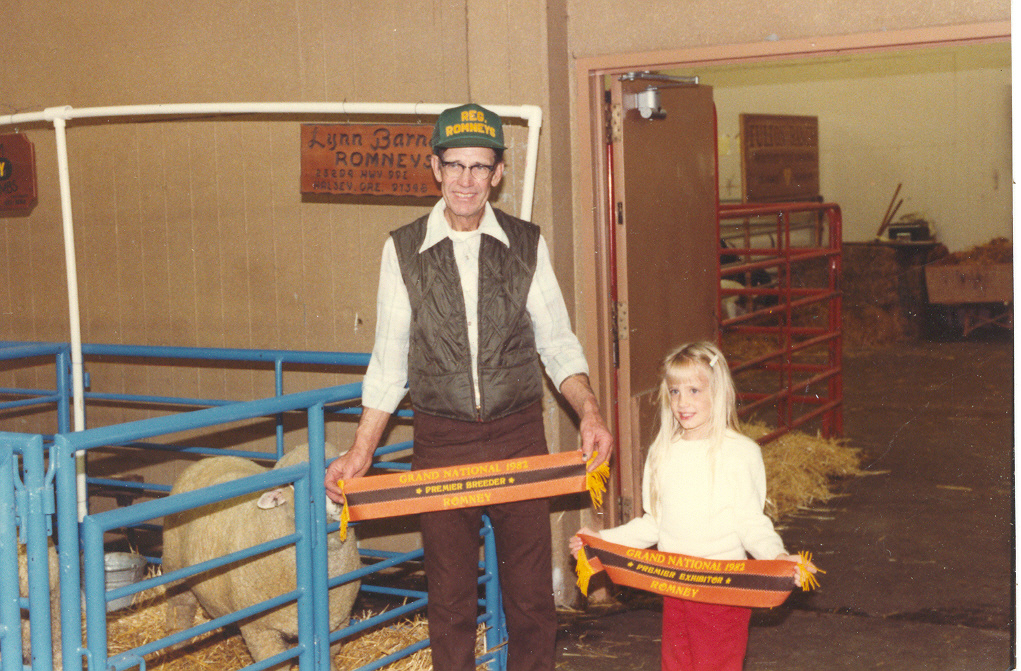
NOTE:  I would like to extend a sincere thank you to Greg Deakin at The Banner Sheep Magazine for allowing me to use this story on the Oregon Sheep Connection blog.  Originally written to be published in an upcoming issue of the magazine, Mr. Barnes’ passing moved me to ask Greg if I could use the story here so fellow sheep enthusiasts can read and share before the 2017 Willamette Valley Ram Sale and the Barnes Dispersal Sale.  Please watch for a printed version of this story in the upcoming issue of The Banner Sheep Magazine!
 

Categories: Current Issues, OPSBA, Uncategorized, upcoming events | Leave a comment

H-2A Proposal— It’s Everyone’s Problem!

If you are involved in the sheep industry then chances are you have heard something about the proposed rule changes governing the H-2A Sheepherder program.  Whether it has been an email from ASI Executive Director Peter Orwick, a post in the weekly ASI email bulletin or a written  plea of support from your local sheep association, you should by now know the H-2A topic is garnering a lot of buzz and with the June 1st public comment deadline looming only a couple of days away, it is certainly turning into a hot topic that has a number of folks fearing the long term impact it could have on our sheep industry.

If you raise sheep and the H-2A topic isn’t at the forefront of your conversations and thought process this weekend, then it should be.  You might ask yourself, does this really affect me?  The answer in one word is…YES!

Unfortunately for many of us, we don’t think this news affects us.  As a busy small purebred producer, hobby fiber farmer or club lamb enthusiast we might be quick to dismiss this proposed policy change as yet another commercial man’s problem, which on the outside it is.  Really in reality, how many of us weekend warrior, carhartt wearing sheep enthusiasts employ imported labor to care for our twenty acres of bliss?  The answer is very few to none!

Chances are if you are like me, a small scale producer that doesn’t employ these workers you might be asking yourself, is all of the time invested delving deeper into this complicated issue and writing an email to the US Department of Labor by June 1st going to fix anything?  Heck, for that matter how do I write the email and which facts do I put into it?

While ultimately there is no guarantee a truckload of comments turned in by industry members will make a change in the current direction of the proposed policy change, however an on-slot of opinions will certainly be on record to point out clearly what those leading this crusade already know.  The fact is this proposed policy change was created by publicly paid bureaucrats who chose not to engage stakeholders in yet another governing process!

Outside of the fact that good legislation or policy should always be the result of collaborative efforts from all parties involved, why is this piece of policy which on the outside appears to affect such a small percentage of our industry important to everyone?

The answer can simply be summed up in two words, “Industry Infrastructure”.  Without industry infrastructure we will fail to have a sheep industry and quite honestly unless you are part of the small minority of producers who markets their lambs, fleeces and bi-products direct to the consumer bi-passing any and all of the traditional harvesting and marketing channels then you will be affected if the changes are implemented as proposed.

Like putting together a jigsaw puzzle, to get a better view of how all of this fits together we must first look at the individual pieces to the puzzle .

  1. What is the H-2A Sheepherder Program and how does it currently affect the infrastructure of our sheep industry?
  2. What are the proposed changes and what affects will they have on our industry?
  3. How can we help?

What is the H-2A Sheepherd Program and how does it affect the infrastructure of our sheep industry?

The H-2A Sheepherder program is a longstanding arrangement overseen by the US Department of Labor.  This program provides a number of our industry’s larger operations with the opportunity to employ skilled workers on work visas from South America and other countries to tend to their flocks, herd their sheep/cattle and engage in the direct production of livestock.

As a small flock producer, the proposed rule changes don’t really have a significant direct impact on us.  I don’t employee workers, I have no need to increase wages and fill out more paperwork, however this ruling has a huge effect on the larger producers and in the long run this truly does affect me!  Why?

Simple, according to a data document provided by Dr. Julie Shiflett, a consultant to the American Sheep Industry office, 38% of our industry’s breeding inventory is managed under this scenario.  Thirty eight percent sounds like a small number until you realize this thirty-eight percent of breeding stock produces a great majority of the lambs and wool providing a steady stream of inventory being fed into the traditional supply chains that feed our lamb feeders, wool supply houses and harvest facilities.

This steady stream of supply from these H-2A herded flocks is what enables our large nationally based harvesting facilities and wool warehouses to continue to offer their customer base a consistent volume of product.  In fact in a recent comment letter made public by ASI, Mountain States Lamb Cooperative clearly noted, “Approximately 65 % of the lambs marketed through our cooperative come directly from ranchers using H-2A open range livestock herders”.  Simply put folks that is two-thirds of their inventory volume comes from operations who will be negatively impacted by the proposed regulations!

Without this ready supply of resources, these steady supply chains risk the threat of starting to dry up and facilities may ultimately lack the inventory to continue at current production levels thus having to  downsize their operations or even shutter their doors.

These are the same entities who have been  investing hundreds of thousands of dollars into our industry to encourage growth via the ASI Let’s Grow program and supporting the American Lamb Board.  If supply channels dry up and money slows down, there is a good chance these funding opportunities to promote lamb and drive our state and local  sheep associations into the future will also dry up.

In addition, this may open up the door for these larger entities to turn to foreign raised lamb to help offset the loss in volume from American producers.

Still not convinced?  Ask yourself where your lambs and wool are ultimately processed.  Think about the benefits, primarily paid for through the dollars of these large producers, the American Lamb Board’s efforts have created for all of us over the past several years.  Think about the amount of money our large warehouse wool buyers have contributed to the OSGA Scholarship fund over the years.   Finally, take count of the number of supporting industries from pharmaceutical and supply companies to transportation and service providers  that will be impacted by a significant decline in sheep numbers.

What are the proposed changes and what affects will they have on our industry?

If you have taken a moment to wade through the proposed policy information that has been sent out, you might be scratching your head and wondering about the key points which have so many folks deeply concerned about the proposed changes.   Ultimately, how do these specific proposed changes impact the future of our industry.  Luckily for all of the  political laymen, ASI, NLFA  and the Oregon Sheep Growers Association office has been working feverishly to simplify the points.  According to documents recently released from ASI, the major issues at the heart of the matter are:

1. The proposed rules would triple the wages paid to H-2A workers.

2. The proposed job description insists that livestock grazing takes place away from fences and, further half of the herders’ year must be away from the ranch headquarters and livestock facilities.

Let’s all face it, unless you are really lucky or an extremely skilled businessman, it is hard to get rich raising sheep.  We have all faced this conversation as we speak with a consumer regarding the cost of lamb on the retail shelf.  As we guide them through the costs and steps to producing these critters our mind can easily start to see just how slight the profit margin is in our industry.

Add to that unforeseen weather issues, predator problems and the rising cost of feed and fuel and on most years we are pushed to the limit.  This proposed Department of Labor policy would triple the cost of paying for labor.  Statistics recently released by ASI point out currently in most operations, hired labor can be figured in as 24 percent of an outfit’s total operating costs.  It doesn’t take a mathematician to quickly decipher the effects of tripling this wage and ultimately calculate the crippling outcome it could have on most operations.

While significantly increasing worker’s wages does have the prospect of being financially debilitating for a number of operations in our industry, the slamming door for a number of the folks directly impacted by these changes will be the ability to stay within the herder’s job description as outlined in the new proposal.

As most of us already know the sheep industry is diverse.  Because of our adaptability and the adaptability of the critters we raise, we can utilize a lot of different landscapes to raise a natural and wholesome product for the consumer.  In some cases this is utilizing federal permit land for summer grazing and in other instances it is helping to manage forage in a sustainable manner such as grazing the grass seed fields of the Willamette Valley.

In either scenario, the production herd will spend some of their time in a fenced scenario and need the careful eye of these trained shepherds to watch over them thus providing for their safety and well-being.

One argument I have heard from some in our industry is the new language in the proposed policy may provide an opportunity for producers to utilize more home-grown labor and force us to stop relying on imported labor resources to do the job.  While in theory this argument sounds wonderful, however in reality it might be another story.

To see the reality check of hiring local labor over imported labor one needs to look no farther than an article from October of 2011 appearing in The New York Times.  The article entitled, “Hiring Locally for Farm Work Is No Cure-All” outlines the hardships farmers from Olathe, Colorado faced when they tried to hire local labor for farm work a few years back.  This was when unemployment was at a high in recent years, so one can only imagine the results in today’s new and improved economy.

How can we help?

  1. Go to the American Sheep Industry’s Issues and Programs Legislative Action Center page.
  2. Read through the information provided to familiarize yourself with the issue.
  3. Click on the “View Posted Comments” link to get some inspiration and see others who have taken the time to give input.
  4. Click on the “Submit Comments Online” button to provide your input.

This issue is a bit like dealing with a wormy, runny sheep.  We all have choices, we can deworm the sheep and cure the runs or we can wait until things heat up and deal with the fly strike.  We are certainly capable of dealing with either one, the big questions are how much time do you want to invest and how much money do you want to lose!

If you have taken the time to read this post through and I have piqued your interest, then take the time to jot down a few comments.  Ultimately, we can either choose to be part of the solution or part of the problem.  Which choice are you going to make?

“Life is about choices.  Some we regret, some we are proud of.  Some will haunt us forever.”

Graham Brown


Categories: Current Issues, Fiber Enthusiasts, OPSBA, Oregon Wool, OSGA, Uncategorized, upcoming events, Wether Sire/Dams, Youth Activities | Tags: , , , | Leave a comment

The Key to a Successful Lambing Season Starts Now!!!

Have you ever wondered why some people seem to be successful throughout the year, while others struggle to make it season to season?  A few keys to success are becoming educated, planning ahead and reevaluating your game plan.

Luckily for producers around Oregon, a group of veteran Central Oregon sheep producers inspired by the OSGA Mentor program this past winter have teamed up with Crook County OSU Extension staff to provide more sheep related networking and educational opportunities.  The group have put together a series of workshops to help get producers move towards their personal goals.

The latest in the series, a Sheep Breeding Soundness Program is set to take place Wednesday July 17, 2013  from 5-7 PM at Timber Creek Farm (15333 NW O’Neil Hwy., Redmond, Oregon)  located off O’Neil Highway between Prineville and Redmond.  Join past teacher, farm owner and local entrepreneur Billie Estridge as she hosts local veterinarian Dr. Jacob Crawford to entertain and enlighten you regarding the key components of evaluating your flock’s reproductive soundness.

From basic information to more advanced topics, the program will cover condition scoring, nutritional needs at breeding time as well as other topics related to the health of your rams and ewes.  Just in time for the new breeding season this program is sure to fit everyone’s needs from the first year 4-Her to the veteran.

Knowing networking and discussion are keys to gaining more knowledge there will be a potluck dinner following the program to encourage sharing and fellowship among our fellow shepherds so bring your favorite dish to share!

For more information or to RSVP, contact Billie Estridge at:  tcf@cbbmail.com or text or call her at 541-480-1340.

Categories: Current Issues, OSGA, upcoming events, Youth Activities | 2 Comments

ASI Convention Wrap-up by Margaret Magruder

The American Sheep Industry 2012 convention in Scottsdale, AZ  had lots of energy, enthusiasm and sunshine!  With the strong lamb, wool, and pelt markets attendees were optimistic about the future of the industry.  The lamb market will need to correct itself somehow during the upcoming year.  Retail prices are very high, the feeder has a backup of lambs and the packer has full freezers. There may be some finger-pointing about who is to blame so I hope this does not hurt the good relationships that have been established between producer, packer, and feeder over the past few years.  One long time feeder reflected upon the 2011 closing of Iowa Lamb saying that “anytime you lose a plant it takes a year to adjust.”  So this is also playing into the market.

The wool “super-wash” process is another bright spot creating more demand for wool in the U.S. textile industry.  Super wash alters the wool fibers to allow wool to be washed and dried without shrinking. Domestic wool can now be processed entirely in the U.S. which allows products to be sold to the Department of Defense as all-American made.

The convention theme was “Grow your Flock” highlighting the industry move to increase production.  This included the Emerging Entrepreneur program which attracted young producers from 11 states and the 2 Plus 2 program encouraging producers to add two more ewes for every 100 head they are currently raising.

Funding for Wildlife Services is always an issue for discussion as well as the Big Horn Sheep and Wolves.  Producers are all encouraged to reach out to their Congressional delegates to educate them on the needs of the sheep industry.

Oregon was well represented as always.  Don Gnos of Albany was elected to represent the National Lamb Feeders on the ASI Executive Board.  He joins Clint Krebs of Ione who currently serves as ASI Vice President.

Keep up on industry activities at www.sheepusa.org  and www.lambcheckoff.com.  And check out the Oregon Sheep Growers Association at www.sheeporegon.com and see what you can do to help move the sheep industry forward.

Written especially for the Oregon Sheep Connection by Margaret Magruder.  Thank you Margaret!

Categories: Current Issues | Leave a comment

Come One, Come All !!!

Come One, Come All!!!

If you are looking for your next fair winner check out the 8th Annual Silver Creek Farms Club Lamb Sale to be held on Saturday April 14th at 907 Cascade Hwy in Salem, Oregon.   Join host Billy Wade and his family for a wonderful lunch and preview at 1 PM and then stay to purchase some of the best quality sheep in the nation at 5 PM.

Noted as one of the best social events to kick off the upcoming show season you won’t want to miss your chance to purchase your next champion.  You can view lamb pictures in the near future at: chttp://www.silvercreekhampshires.com .

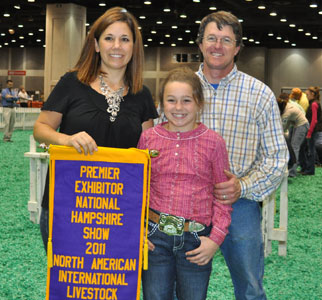
Noted as one of the top show flocks in the nation, the Wade and Feller families have been successful at the national level for years including showing both the Champion and Reserve Champion Slick Sheared Hampshire Rams at NAILE in Louisville, Kentucky this past fall as well as having the high selling Hampshire (Breeding) Ram at the Midwest Ram Sale in June of 2011.  In addition oldest daughter Izzy swept most of the junior shows with her Hampshire ewe lamb that was also Champion Hampshire Ewe at the Cow Palace.

In addition to the family’s many successes both on the state level and nationally in the Hampshire breed ring this past year, a number of juniors buying sheep from the family sported wins this past summer including both the Champion and Reserve Champion Lambs at the Butte Valley Fair in Tulelake, California, the Champion Market Lamb at Marion County, the Champion Market Lamb at Josephine County Fair, the Reserve Champion 4-H Market Lamb at Yamhill County as well as both the Champion Wether Sire and Dam at the Oregon State Fair Open Class Show.

If you are interested in correct, high quality lambs that come from a tried and true breeding program you won’t want to miss the 2012 Silver Creek Farms Sale on April 14th.  For more information, feel free to contact Billy and Michelle at (503) 931-6927 or at Wadewesthamps@yahoo.com.  Simply amazing people producing amazing sheep!

Categories: Current Issues, upcoming events, Wether Sire/Dams, Youth Activities | 2 Comments

A Shepherd’s Jewlry Box!

Fate often times plays an amazing role in one’s life.  Such was the case at the final luncheon of the Oregon Sheep Growers Association convention a couple weeks back.  As I sat down to chat with a wonderful new acquaintance we were soon joined at our table with the delegation from the Oregon Department of Fish and Wildlife as well as our industry’s brilliant entrepreneur and stateswoman Margaret Magruder.  Add to the mix a charming couple from Southern Oregon and the table was set, so to speak, for some titillating mealtime conversation.

The conversation was kick started with a number of humorous questions and comments  about the proper method to eat the nearly half a head of lettuce presented to each of us as a salad.  All of the fun and laughter about our dining experience  led up to a myriad of conversations about a variety of issues in the agriculture industry.  It was during one of these sessions the conversation turned to the success of the scholarship auction the night before.  It was here that I mentioned as I was dressing for the days festivities I felt like my shepherd’s jewelry box was a bit sparse compared to many other shepherds who I had seen sporting a multitude of wool fashions over the past couple of days.  It was at this time my wonderful mentor Ms. Magruder pointed out I should remedy this situation listing off a number of fine retail establishments that specialized in wool clothing.

So it was to our surprise when ODF&W director Mr. Roy Elicker enthusiastically chimed into the conversation and proceeded to impress us all with his knowledge of 100% wool garments.  Listing off the major manufactures as if he was reading a glossary of advertisers  in a fashion magazine, Elicker went on to sing the praises of wool attire.  It appears as an avid sportsman Mr. Elicker has had first hand comparative knowledge of how time and again wool out performs synthetics in field tests around the Willamette Valley.

So it is with great pride I salute Mr. Elicker and his comrades from the Oregon Department of Fish and Wildlife for gracing us with their presence and helping to support our industry.  Keep up the good work!

As for myself, it is time for me to start working on my shepherd’s jewelry box and start adding in more wool products.  The hard part is deciding what I want to buy first.  Will it be one of those gorgeous Pendleton wool blankets for my bed, a Umatilla wool shirt made from wool grown  in Oregon for my husband or quite possibly a handmade item from one of my many  fiber artist friends?

My challenge to you as a sheep producer is to look in your closet and take stock.  What is in your shepherd’s jewelry box?

Categories: Current Issues, Fiber Enthusiasts, Oregon Wool, OSGA, Uncategorized | Leave a comment

Is its Bark Bigger than its Bite?

As I sit down to ponder the plethora of wolf information I have gathered over the past few weeks my mind keeps wandering back to one thought-is its bark bigger than its bite?

I came to the conclusion that in some sense it is.  That sense is the fact that the environmental and animal rights factions has the ear of the public and boy are they making a lot of noise.  From naming the wayward wolf in Southern Oregon to romantasizing the ecotourism centered around them to offset economic losses in the community, the wolf is being applauded by those factions as a great addition to the area.  While in reality ranchers continue to watch not only their livelihood be affected but the overall mental and physical health of the very herds they have been entrusted to care for and protect.

Although I have seen some great print stories throughout the past few weeks, I have to say  one of the most moving pieces of media I have found so far is the one produced by the Wallowa Valley Online at http://wallowavalleyonline.com/wvo/?p=10041 .

With this said, it is truly our time to step up and call the environmental factions bluff.  We need to ultimately decide whether their bark is bigger than their bite?  Check out this video and you decide what role you want to play in this game.  Either pass it on or delete it, the decision is yours.

Categories: Current Issues, OPSBA, OSGA, Uncategorized | 5 Comments

Blog at WordPress.com.